When we stop seeing things that are right in front of us.
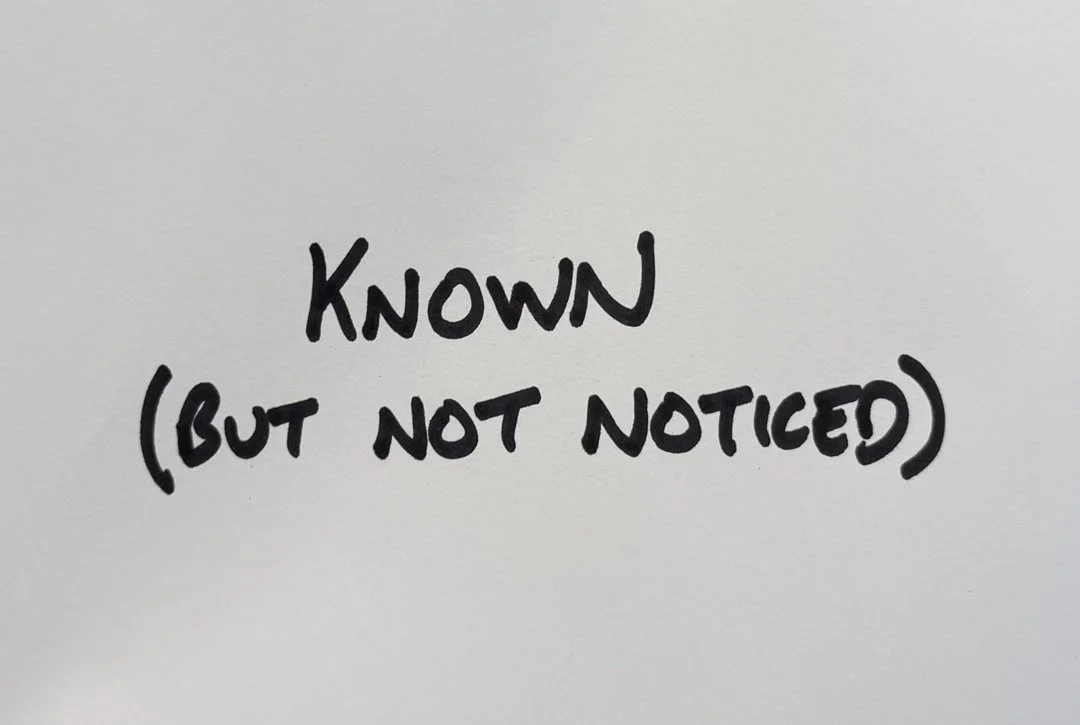
This morning, as I was unplugging my laptop to bring it into the office, I noticed a small black mark on the wall next to my desk.
It’s nothing major. Just a little mark that, months ago, I made when the corner of my laptop hit the wall.
But what struck me was – while I knew it was there – I don’t notice it on a day-to-day basis. I sit at that desk for hours every day. While I didn’t pull out a measuring tape – I’d guess I sit within 3 feet of it.
And yet, at some point, I stopped seeing it. Not because it wasn’t there – but because I stopped noticing it was.
That got me thinking about how often the same thing happens in our work. When you spend enough time with or near something, you learn the idiosyncrasies – how it (actually) works, the (real) way to use it, and how to work around the parts that don’t (quite) work.
You know the website navigation isn’t quite intuitive - but you know which menu the information is under.
You know the packaging hierarchy could be clearer - but you’ve looked at it enough times that you instinctively know where to look.
You know the terminology is a little confusing - but you’ve used it so often in meetings and conversations that it no longer feels confusing to you.
You know there's an awkward step in the consumer journey - but you know the workaround.
Eventually, those things stop feeling strange because we know how they work (or, at least, how they're supposed to work).
The consumer doesn't have that luxury.
And a first-time consumer definitely doesn't.
They don't know the workaround.
They don't know why something is organized the way it is.
They don't know that “everyone knows” what a particular term means.
And they certainly don't know which pieces of the experience your team has been meaning to fix for the last two years (but just hasn’t gotten around to yet).
They just experience it. As is.
That's one of the dangers of familiarity.
The longer we spend with something, the better we get at navigating its imperfections - and the worse we can become at noticing them.
The thing that would stop a first-time consumer in their tracks may barely register with someone who has spent hundreds of hours with the brand.
And that's why there's immense value in trying to experience your own brand without falling back on what you already know.
Go through your website like you've never seen it before.
Pick up your package and try to understand it without using anything you already know.
Search for your brand across social media platforms and see what a consumer would find if they didn't already follow you.
Answer a question without taking the shortcut you already know exists.
And, as you go, take notes. If you don't capture the gaps while you're noticing them, chances are your knowledge and familiarity will make them fade into the background again.
If you’re having trouble disconnecting from what you know, ask someone who doesn't live with the brand every day to do the same thing (and resist the urge to explain what they're supposed to do).
Because sometimes the problems we stop noticing aren't gone.
We've just gotten really good at living with them. So good, in fact, that we may stop noticing them altogether.
So here's the question I'd leave you with: What has your familiarity taught you to stop noticing?
There's probably a black mark on the wall somewhere.
And there's a decent chance your consumer can still see it.
Thanks for spending time with me in my workshop,
Eric